When to request a property valuation in the Netherlands
Choose the best moment for a Dutch property valuation by matching your decision with the recipient, valuation date and deadline.

TL;DR
The best moments to request a valuation in the Netherlands are tied to a decision, recipient and deadline. Ask early enough to name the value date and collect the records the recipient will accept.
An accepted offer, mortgage submission, renovation, sale or changed evidence can alter the brief. A calendar date alone does not tell you which report fits.
Who needs a timing decision
This timing map is for you if you are buying, refinancing, renovating, selling or making an asset decision and you are unsure when to appoint a valuer. It helps you put the event, evidence and recipient in one sequence before a deadline starts to close.
How the seven moments were chosen
Each moment changes at least one of five things: the question, the intended recipient, the valuation date, the available evidence or the delivery deadline. The sequence covers an early orientation question, a confirmed purchase, financing, building work, sale, division and a material change to the file.
If a lender is involved, compare your financing questions with mortgage preparation for a Dutch home before setting a valuation date.
If your lender asks for an NHG file, compare the NHG physical valuation report requirements with the recipient’s brief before you set the inspection date. The six-month condition applies within that NHG setting, not as a universal expiry rule.
When an accepted offer creates a deadline, put valuation timing when buying a home beside the lender’s date so your appointment and report arrive in the right order.
The timeline separates events that create a new question from dates that simply appear on a calendar. That distinction keeps an old figure from being carried into a new decision without checking its purpose.
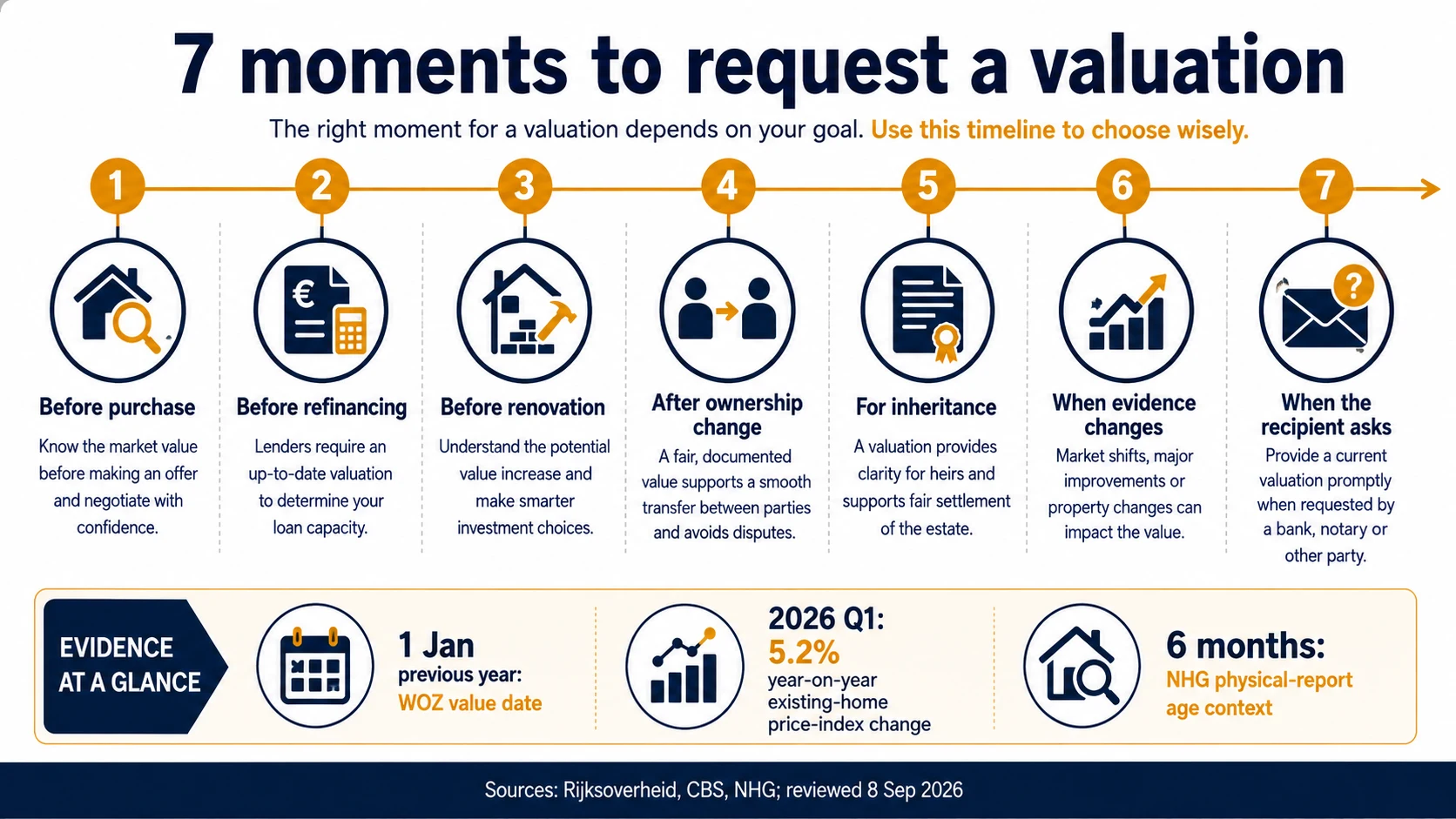
Keep the 1 January WOZ reference date, six-month NHG physical-report condition and CBS market index in their own settings; each answers a different property question.
Seven moments that change the request
1. Before a decision becomes expensive
Ask first whether you need an orientation figure, a formal report or a conversation about the evidence. Naming the decision at this stage gives you room to collect records and avoid ordering a report for the wrong recipient.
Score: Request early when the decision is still flexible and the brief needs shaping.
2. After an offer is accepted
An accepted offer adds a price, contract context and often a financing deadline. Give the valuer the agreed information while keeping the purchase price separate from the independent value conclusion.
Score: The event sets a practical start point; the recipient still controls the report conditions.
3. Before a mortgage or refinancing submission
Set the appointment before the lender deadline leaves no time for missing documents or a correction. The general 100% loan-to-value ceiling relates to home value; income, debts and lender policy are separate checks.
Score: A financing deadline is a timing signal, not a promise of approval.
4. Before renovation work starts
A pre-work request can record the current property and a described after-work scenario. Plans, specifications, budgets and permits need a status so the valuer can separate facts from assumptions.
Score: Set the date while the starting condition and proposed work are still documentable.
5. After material work is complete
Completed work creates evidence that did not exist in the earlier file: actual finish, condition and supporting records. If the recipient needs a post-work value, the inspection date should match that state.
Score: Book once the relevant work and records are genuinely available.
6. Before a sale or asset division is negotiated
A sale, transfer or division can need a value tied to a defined event and intended user. State the date and purpose before work begins so an asking price or settlement figure does not silently replace the valuation question.
Score: Set the valuation date with the people who will rely on the result.
7. When the property, recipient or evidence changes
A changed layout, new right, different lender, missing record or new comparable sale can alter the question. Compare the new facts with the existing brief before assuming the old report still answers it.
Score: A material change calls for a fresh fit check even when the report is recent.
Comparison cards
- Event: Name the purchase, finance, work, sale or change that created the question.
- Date: Separate the event date, inspection date, valuation date and delivery deadline.
- Recipient: Record who accepts the report and which records or format that person requires.
Choose the timing by situation
For a buyer, send the accepted offer, property records and lender deadline together. For a seller, state whether the result supports a pricing decision, a negotiation or a different recipient. The same address can need a different date when the purpose changes.
For renovation, separate current value from value after completion. For a WOZ question, retain the municipal reference date and the private valuation date as separate fields. For a new recipient, ask that person which report age and evidence remain acceptable.
Questions about the right moment
Does a valuation always need to happen after an offer?
No single event controls every assignment. An early question can shape the brief, while a lender-facing report needs the recipient and deadline that belong to the accepted transaction.
Does six months mean every report expires?
No. The six-month age condition belongs to an NHG physical-report setting. The receiving party and the purpose decide whether another report remains usable.
Does a CBS price index set the value date?
No. A CBS index describes a defined population, geography and period. It gives market context; a property valuation still needs its own date and evidence.
Where the timing map stops
No universal lead time fits every property or recipient. A complete brief, an unusual right, a missing record and a lender deadline can change the practical schedule.
Confirm the current report type, age rule, delivery expectation and fee with the intended recipient and the valuer. The event tells you when to ask; the live assignment tells you what to request.
Put your deadline into words
Write the decision, intended recipient, valuation date and latest delivery date in one message. That gives a valuer a precise timing question to answer.
Seven moments can change a valuation request. If you want to ask about a purchase date, renovation stage, report age or recipient condition, send a focused general question through the English contact form. Please leave passports, contracts, bank details and other personal documents out of the public form.Ask about valuation timing