Compare property appraisers: a practical decision worksheet
Compare property appraisers on assignment, evidence, recipient, validation and total cost so a low quote does not hide a narrower service.

TL;DR
Do you have two or more property-appraiser quotes? Put the assignment, evidence and handover next to each other before comparing totals. A lower fee can cover less work, so write down the purpose, recipient, valuation date, property file, comparable evidence and NWWI review path.
The aim is a like-for-like comparison that makes the differences visible before you choose.
If you are comparing Rotterdam quotes, put the same assignment questions beside comparing property appraisers in Amsterdam before you treat a price difference as a quality difference.
- What does the report need to answer?
- What will the appraiser actually inspect and explain?
- Can the named recipient use the finished report?
The highest score on a private worksheet does not guarantee a lender’s acceptance. It gives you a clear list of questions before you appoint anyone.
If renovation is part of the decision, compare the current and planned value questions with a valuation before renovation before you compare fees.
For private orientation, compare Kadaster’s home-value information with the report question because the public products have their own scope and price.
If one Rotterdam property raises several evidence questions, ask whether the assignment covers complex valuation cases rather than comparing only the headline fee.
The two things you are comparing
Start with the assignment brief, not the provider name. Write the property address, type, ownership position, purpose and required value date. Add the intended recipient; a mortgage lender, buyer, seller and private owner may need different evidence.
Then place each quote below the brief. Check whether it states:
- inspection or information basis;
- report type and intended recipient;
- valuation date and delivery timing;
- research into comparable sales and property records;
- treatment of permits, ground lease, VvE or planned work;
- NWWI review or lender requirements;
- VAT, third-party charges and any conditions.
A quote that leaves out one of these items may still be useful. It needs a written answer before it can be compared fairly.
Criteria that matter
Use the same questions for every option. The appraiser should explain how the property facts, comparable evidence and assignment purpose connect. A professional register can support a question about conduct; it does not replace a review of the proposed report.
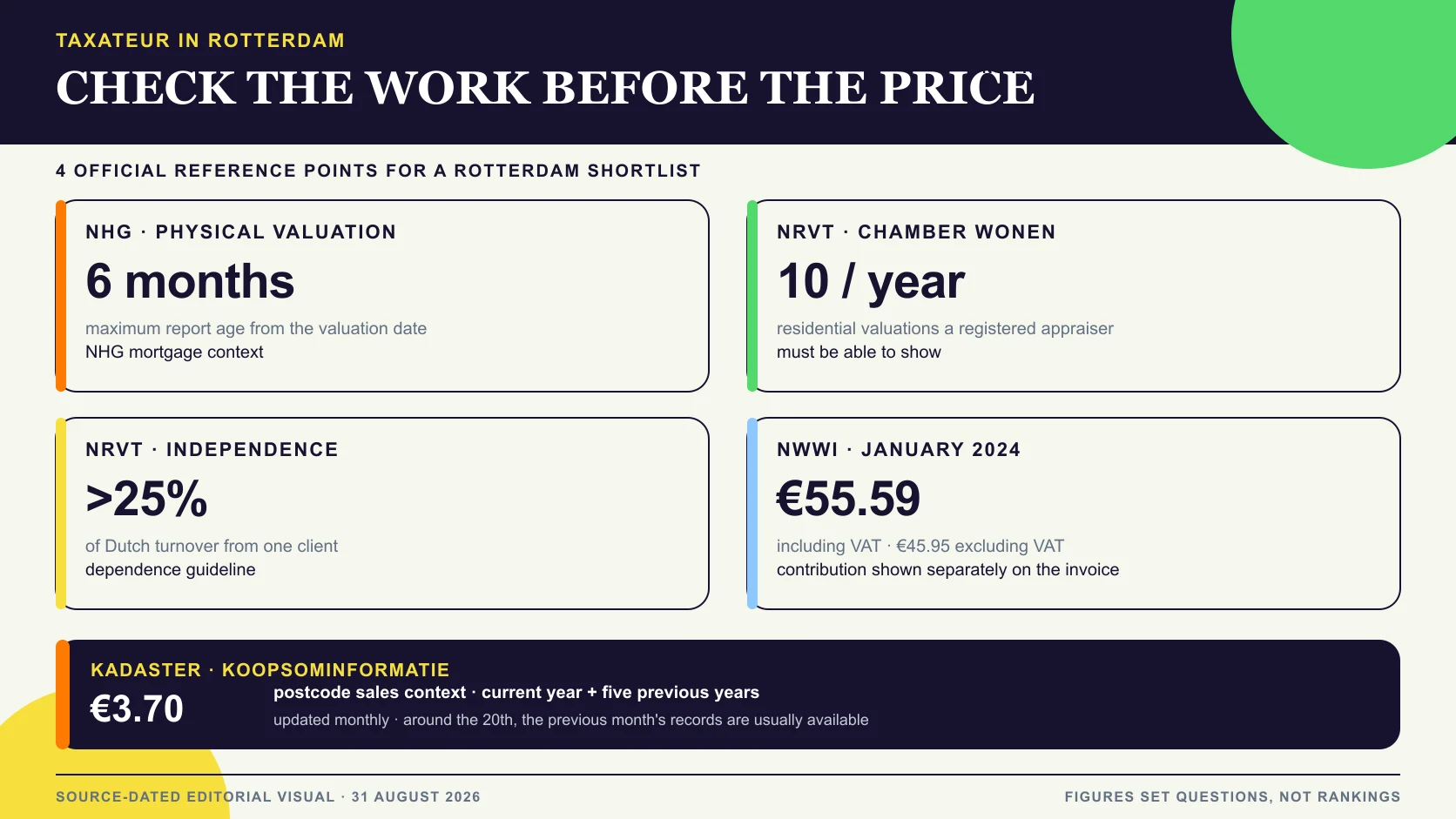
NRVT’s rules describe objectivity and independence as professional requirements. The same page gives a guideline for a client relationship that exceeds 25% of annual turnover. Treat that figure as a professional-conduct check, not as a quality score for one report.
NHG’s physical-report requirements say the maker must be independent, an accepted NWWI review institute must validate the report and the report may be no more than six months old from the valuation date in the NHG context. Ask if those conditions apply to your file.
NWWI describes NWWI review as a check of appraiser and report against set quality requirements. NWWI review does not make the valuer’s opinion interchangeable with the lender’s decision.
A simple comparison worksheet
Score each option from 0 to 2 on seven practical dimensions:
- Purpose: 0 when the purpose is missing; 1 when it is broad; 2 when it matches your decision.
- Recipient: 0 when absent; 1 when implied; 2 when named.
- Date: 0 when absent; 1 when a deadline appears; 2 when the valuation date and report timing are clear.
- Property brief: 0 when no document list appears; 1 when a short list appears; 2 when relevant legal, physical and planned-work details are named.
- Evidence: 0 when no comparable or record work is described; 1 when the words appear without detail; 2 when the evidence path is explained.
- Acceptance path: 0 when the lender or NWWI review question is ignored; 1 when it is left to you; 2 when the quote says how it will be checked.
- Cost clarity: 0 when the total is unclear; 1 when one total is given; 2 when included work, VAT and extras are separated.
The maximum is 14 points. Use the scale to ask consistent questions about scope, evidence and handover. The result is a comparison aid; the appraiser’s professional opinion and the lender’s acceptance still require separate checks. A low score tells you where clarification is needed.
Scenario choices
Mortgage file. Prioritise the named lender, accepted report type, value date, NWWI review and age condition. A report can contain a sensible value and still miss the lender’s document rule.
Purchase review. Compare whether the report will explain the property, the agreed price and relevant comparable sales. Keep the purchase contract and mortgage deadline beside the brief.
Renovation. Ask whether the file needs the present value, a planned post-work value or both. Keep drawings, cost evidence, permits and completion assumptions separate. Treat the current and post-work questions as separate lines in the brief.
Private orientation. Public records can help frame a question. Kadaster’s home-value products list Koopsominformatie at €3.70 and its Woningrapport at €21.50. Those products serve orientation; they are not interchangeable with a professional report.
Where a comparison can mislead
A price comparison can fail when one quote covers a full inspection and another assumes documents supplied by the owner. It can also fail when the value dates differ, one report is for a lender and the other is private, or one option includes NWWI review while the other does not.
Ask the appraiser to answer unresolved items in writing. Keep the answer with the quote. If the address, purpose, recipient or renovation assumption changes, repeat the comparison.
A second opinion can be useful when the evidence is unclear. It cannot make two reports comparable when they answer different questions. A lower figure is a reason to inspect the assumptions and comparable evidence. That inspection can show whether a factual error is present.
A complex file needs a separate question for each evidence point.
Frequently asked questions
How many appraisers should I compare?
For a meaningful choice, request written scopes from more than one suitable option when timing allows. Compare the work described, not a name or headline price.
Does NWWI review make one appraiser better?
NWWI review checks the report against the institute’s requirements. It does not rank appraisers or guarantee a mortgage decision.
Can I compare a Kadaster product with a valuation report?
You can compare their purpose and information value. Kadaster products support orientation; a professional report answers an assignment for a named recipient and date.
Is a six-month rule universal?
NHG states the six-month condition for a physical report in its own context. Your lender may set a different hand-in date or product condition.
Ask a comparison question
Use the English contact form for a general question about your brief, recipient, valuation date or quote wording. Leave out identity documents, bank details and sensitive files.Ask a comparison question